
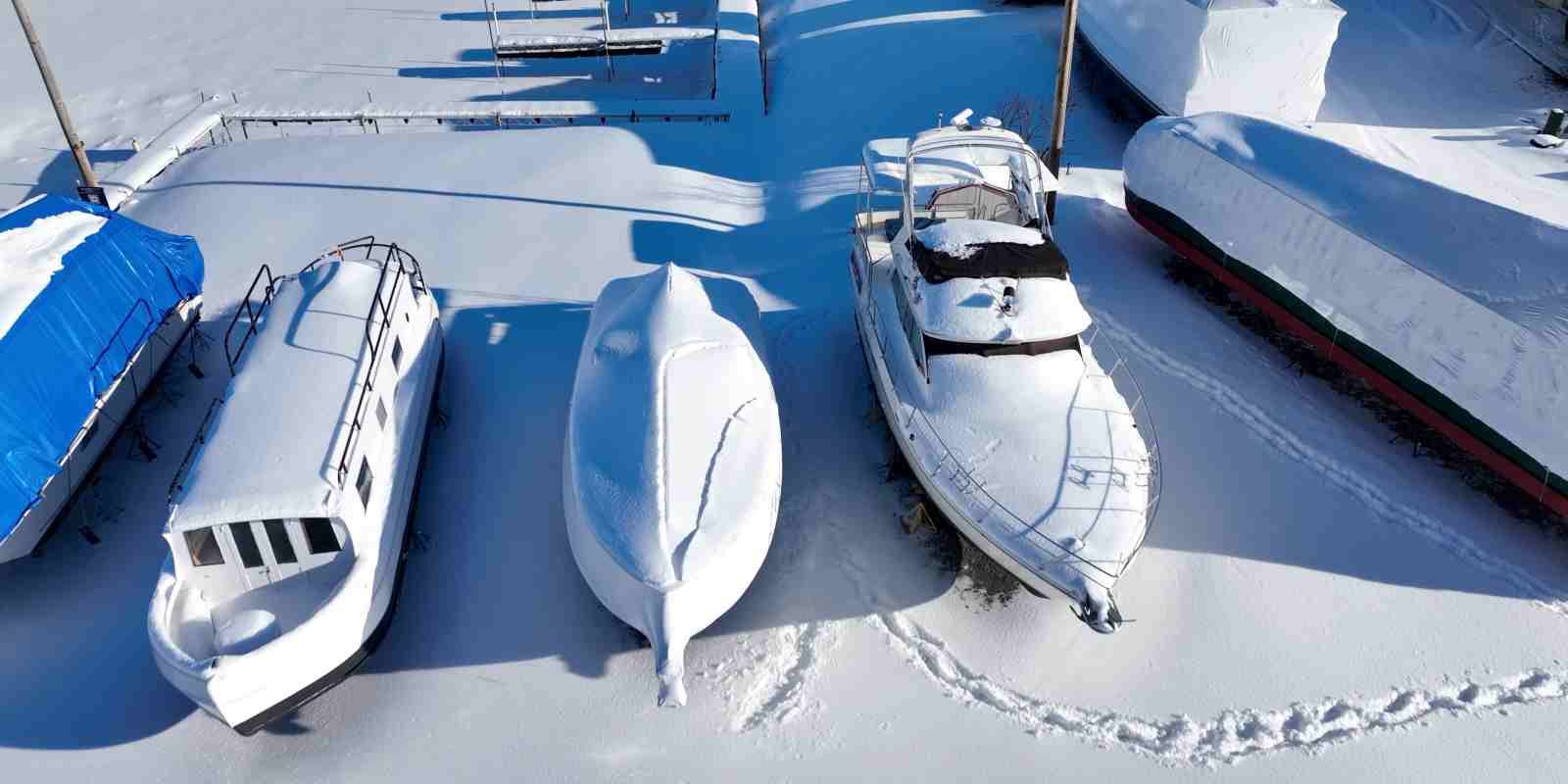
A boat hauled out for the winter can still be damaged by fire, stolen from a storage yard, or struck by a windstorm long before spring launch. Those losses may remain covered under boat storage insurance, but coverage during the offseason depends on the policy’s lay-up warranty.
A lay-up warranty identifies the months when a vessel must be out of commission and may require specific steps, such as winterization, before coverage applies as intended. The requirements of a boat insurance lay-up period are worth examining before haul-out because boatowner policies are not standardized the way auto and homeowners policies are. Storage conditions, lay-up requirements, and offseason coverage can differ substantially from one carrier to another.
For Connecticut and tri-state boat owners preparing for haul-out season, reviewing those differences before the boat enters winter boat storage can help prevent disputes if a claim occurs between haul-out and spring launch.
What a Lay-Up Warranty Requires
A First Circuit Court of Appeals ruling demonstrates how closely courts may read lay-up language when coverage is disputed. In that case, a yacht owner argued that the vessel qualified as laid up because it was no longer in active use and was waiting for haul-out. The court disagreed, concluding that the yacht had not been laid up and placed out of commission because it remained afloat and had not undergone the measures normally associated with winter storage.
The ruling drew a clear distinction between taking a boat out of service and simply stopping its use. Ending recreational use alone is not always enough to satisfy a lay-up warranty.
Policies may require affirmative action. Depending on the policy language, insurers may expect evidence that the vessel was winterized, secured against seasonal hazards, prepared for long-term storage, or otherwise placed out of commission. Winterization invoices, marina storage agreements, and maintenance records can become important documentation if a claim occurs during the lay-up period.
Risks That Stay Covered While the Boat Sits
A vessel stored ashore remains exposed to several causes of loss even after the boating season ends. Physical damage coverage may continue to protect against risks that have little to do with operating the boat.
● A fire may originate in a storage facility, marina yard, or nearby structure.
● The vessel or covered boating equipment could be stolen.
● Lightning could strike boats stored outdoors.
● Vandalism could occur during the offseason.
● A windstorm could damage boats stored on stands, trailers, or racks.
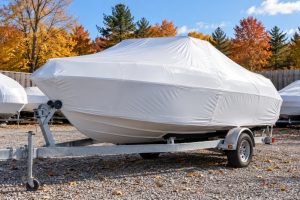
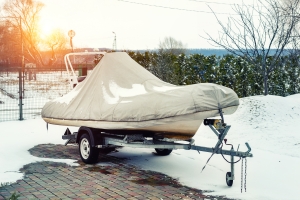
Coastal winter storms in Connecticut can damage shrink wrap, shift boats on stands, or send debris across a storage yard. A boat that never enters the water all season can still sustain a substantial covered loss.
Liability protection may remain active during storage, subject to the policy’s terms and conditions. If a stored vessel causes bodily injury or property damage, liability coverage may respond according to the policy’s terms. Boatowner policies may also include wreck removal coverage when removal becomes legally required following a covered loss.
Because coverage details vary by carrier, reviewing the policy before haul-out can help identify questions while there is still time to address them.
What Storage Location and Method Change
Storage arrangements influence underwriting decisions and premium calculations. Insurers may evaluate where and how a vessel will be stored when determining boat insurance cost. A boat kept inside a monitored indoor facility presents different exposures than one stored outdoors on a trailer in a residential driveway.
Different storage methods create different levels of risk and may affect how an insurer evaluates the vessel. Those differences may affect pricing, available coverage options, or policy requirements.
The storage location listed on the policy should match where the vessel actually spends the offseason. An owner who moves a boat from a home driveway to indoor marina storage, or from a marina to home storage, should notify the insurer before haul-out rather than waiting until renewal.
That step is particularly relevant for Connecticut boat insurance, where coastal exposure and marina concentration can influence underwriting decisions.
Personal Effects and Gear Left Aboard
Personal property coverage is often misunderstood during winter storage. Many boat owners expect everything left aboard the vessel to be covered under the physical damage portion of the policy.
Depending on the policy language, that coverage often applies to the boat itself and equipment associated with its operation. Personal effects that are not permanently attached and do not contribute to the vessel’s operation may be excluded.
Common examples include:
● Smartphones and tablets
● Laptop computers
● Cameras
● Portable electronics
● Fishing tackle and gear
● Recreational equipment
Some insurers offer endorsements that provide limited protection for personal effects carried aboard the vessel. Coverage limits, deductibles, and eligible property categories vary by carrier.
Inventorying valuable equipment before storage helps identify potential coverage gaps. Removing high-value electronics and other portable items may also reduce theft exposure during the offseason.
A Pre-Haul-Out Review with Your Advisor

The weeks before haul-out provide an opportunity to compare the boat’s actual storage plans against the information on file with the insurer.
A review should confirm the lay-up dates identified in the policy, documentation related to winterizing a boat, and the storage location currently recorded by the insurer. It should also address any planned changes to the storage facility or storage method, coverage available for fishing equipment, electronics, and other personal effects, and any lay-up premium credit that may apply. In addition, the review is a good time to discuss whether questions related to does homeowners insurance cover boats apply to property associated with the vessel.
Each carrier approaches these issues differently. A storage arrangement accepted by one insurer may require additional documentation from another.
Claim decisions may come back to information provided before storage begins, including lay-up dates and winterization records. Those details become important when a loss occurs during the offseason.
Before haul-out, call JMG at (844) 304-7332 to review your boat storage insurance terms with an advisor who can compare lay-up provisions across multiple carriers and confirm that your winter storage plan aligns with your policy requirements.