
Essential Takeaways:
- Standard policies exclude code-required upgrades after a partial loss.
- Actual cash value payouts often fall short of the true costs of rebuilding.
- Sewer backup and sump overflow are not covered by default.
- Original period materials are depreciated, not replicated.
- Endorsements can close every gap here, but they must be added proactively.
Many Connecticut homeowners with older properties assume they don’t need to worry about what happens to their home if they have an insurance policy. Even if your premiums are paid, however, it is important to understand that having a policy is not the same as being covered for everything. In fact, there can be significant gaps between what you think it covers and what will actually be covered when it comes time to file a claim. Standard homeowners insurance policies in CT were not written with pre-1960 construction in mind, and the exclusions in most base forms are built to address modern materials and building codes.
The following are four coverage gaps that consistently leave older Connecticut homes exposed. We’ll explore why they exist and what can be done before a loss makes them painful.
Gap 1: Ordinance and Law Coverage Determines Whether Code Upgrades Get Paid
Whenever a covered loss requires a home to be partially or fully reconstructed, Connecticut building codes require that the rebuilt portions meet current standards. In practice, this means installing updated electrical panels and plumbing, new insulation, and possibly even making structural modifications. Standard homeowners policies are not obligated to pay for any of this, and it can be very expensive.
Unfortunately, there is a wide gap between the original construction standards to which homes built before the 1960s were built and current code requirements. Without an ordinance and law endorsement, you will bear the costs of making these improvements out of pocket, even if the loss is fully covered. This is one of the most consistently overlooked exposures in older Connecticut properties.
Gap 2: Actual Cash Value Coverage Leaves Older Homes Short at Claim Time
Some policies have replacement cost coverage, while others follow the actual cash value model. Misunderstanding this distinction is an expensive mistake. Replacement cost coverage will cover the costs of rebuilding the home using comparable materials at current prices, while actual cash value subtracts for depreciation first. The latter can produce a settlement that is substantially lower than what rebuilding will actually cost.
For a Connecticut home that features historical touches such as original plaster walls, old-growth hardwood floors, or custom millwork, the gap can run deep. Many older policies default to actual cash value without the homeowner even realizing it. It often doesn’t become apparent until it’s time to file a claim, at which point changing the coverage is no longer possible.
Gap 3: Water Backup and Service Line Coverage Is Always an Add-On, Never a Default
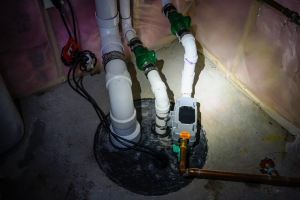
Homeowners should keep in mind that sewer backup and sump pump overflow are common exclusions in standard homeowners’ policies. This can result in significant exposure for older Connecticut homes with cast-iron pipes, original drainage infrastructure, aging clay sewer lines, and similar concerns.
Water backup coverage and service line coverage are both available as endorsements. Neither appears in any standard policy form. Adding them requires a proactive conversation with an agent before a loss, because no endorsement can be added retroactively once a claim is in progress.
Gap 4: Original Architectural Features Are Depreciated, Not Replicated, Under Standard Policies
Custom millwork, wide-plank hardwood floors, and plaster walls are all part of the appeal of older Connecticut homes. Still, these are exactly the types of features that a standard replacement cost formula values at modern material prices.
Agreed value and extended replacement cost endorsements address this, but they require you to carefully document these original features and their replacement values before a claim is ever filed.
Standard Policy vs. What Older Connecticut Homes Actually Need
The following comparison shows how a standard policy’s assumptions fall short of the coverage older Connecticut homes actually require.
| Coverage Area | Standard Policy | What Older CT Homes Often Need |
| Code Upgrade Costs After a Loss | Not Included | Ordinance and Law Endorsement |
| Rebuilding Cost Basis | Often Actual Cash Value | True Replacement Cost Coverage |
| Sewer Backup and Sump Overflow | Not Included | Water Backup Endorsement |
| Original Period Materials | Depreciated Modern Value | Agreed or Extended Replacement Cost |
| Water and Sewer Service Lines | Not Included | Service Line Coverage Endorsement |
Find Out What Your Connecticut Policy Is Missing

These gaps can be difficult to find without insurance expertise and experience deciphering policy language and exclusions. A policy review on an older Connecticut home is the only reliable way to confirm whether your coverage actually matches the property it is intended to protect.
At JMG Insurance, we work with Connecticut homeowners to identify exactly what their current policy covers and, more importantly, what it does not. If your home was built before 1960 or you have never had a line-by-line review of your homeowners insurance policy in CT, contact us today. We’ll identify gaps in your current coverage and recommend endorsements to close them before you ever have to file a claim.