


For most Connecticut homeowners asking if a new roof can lower homeowners insurance, the simplest answer is that it can, with the right policy update. A new roof also determines which carriers will write the home and how a future roof claim gets paid, and both of those may outweigh any line-item discount on your homeowners insurance.
How much a new roof changes your premium, your carrier options, and your claim payout depends on the roof’s installation date, its material, and whether your policy pays roof claims at replacement cost or actual cash value.
What a Rate Credit Actually Looks Like
Some carriers file a separate roof age or roof material credit with the Connecticut Insurance Department. Others build roof age into the base rate, so the premium moves when the roof changes, but no roof replacement insurance discount appears on the declarations page.
Where a credit exists, it’s carrier-specific, and eligibility depends on documentation rather than the work itself. Carriers look for a final invoice and a completion date, and some also ask for photos or a permit record before they update the roof year in their system.
Ask your agent to confirm the credit in writing before the job starts, since savings estimates from a sales conversation may not match the carrier’s underwriting rules.
Eligibility Is the Larger Financial Question
Roof age underwriting guidelines vary by insurer, but a Feb. 6, 2026, Connecticut Insurance Department consumer advisory notes that limits for asphalt, wood, and rubber roofs commonly fall between 15 and 20 years, while architectural shingles often qualify for 25 years or more. Tile and slate are generally treated as lifetime materials. Insurers screen roofs with satellite images and drone photography, so an aging roof can surface at renewal before anyone visits the property.
Once a roof crosses a carrier’s limit, the home may move out of a preferred program, receive a nonrenewal, or end up in the surplus lines market or the Connecticut FAIR Plan, the state’s insurer of last resort. Connecticut requires at least 60 days’ written notice of nonrenewal with a stated reason. A March 19, 2024, department notice added that cosmetic discoloration or streaking does not support a nonrenewal and that insurers need evidence of material degradation or damage that changes the roof’s propensity for loss.
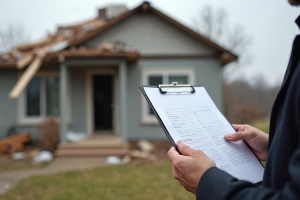
Keeping a standard market carrier can have a larger financial impact than any single discount. For a homeowner already facing nonrenewal, a documented new roof might reopen carriers that declined the home at the last renewal.
Settlement Basis Moves the Most Money
On a $20,000 roof, a hypothetical payment schedule that pays 40% at age 18 produces an $8,000 settlement before the deductible. The same hail claim settled at replacement cost may pay up to the full $20,000, less the deductible.
| Settlement Basis | How the Roof Claim Is Valued | Where It Commonly Applies |
|---|---|---|
| Replacement cost | Current cost to replace, no depreciation deducted | Newer roofs on eligible programs |
| Actual cash value | Replacement cost reduced for age and wear | Older roofs past a carrier-set age threshold |
| Roof payment schedule | A fixed percentage tied to the roof’s age | Added by endorsement, often at renewal |
The ISO homeowners program includes the HO 04 93 endorsement, which settles windstorm and hail losses to roof surfacing at actual cash value. Carriers apply it primarily at new business when the roof’s age doesn’t qualify for replacement cost. Many carriers file their own payment schedules instead, with percentages that decline by roof age and material.
What Carriers Look at Beyond Age
A three-tab asphalt roof, an architectural shingle roof, standing seam metal, and slate could each fall into a different underwriting bracket because their expected service lives differ. For the same reason, the age at which a carrier shifts a roof to actual cash value or a payment schedule varies by material.
Shingles rated Class 4 under the UL 2218 impact standard may earn an impact-resistant shingle credit where the carrier has filed one. Connecticut General Statutes Section 38a-316b requires homeowners insurers to offer a discount for permanent storm shutters or impact-resistant glass, but the statute does not extend to roofs.
The Connecticut Insurance Department promoted the Insurance Institute for Business & Home Safety (IBHS) FORTIFIED Roof standard in July 2026 without mandating a discount. A FORTIFIED Roof requires a sealed roof deck, ring-shank nails in an enhanced pattern, a wider drip edge, and a fully adhered starter strip, among other possibilities, so the standard has to be written into the roofing contract before work begins.
A building permit and a contractor registered with the Connecticut Department of Consumer Protection as a home improvement contractor may facilitate both the underwriting file and any future claim.
Questions to Ask Before You Sign

- What settlement basis applies to my roof today, and what will it be after replacement?
- Does my carrier file a roof age, roof material, or impact-resistance credit in Connecticut, and what proof does it require?
- Will the carrier update my roof year mid-term, or only at renewal?
- If I’m facing nonrenewal, which carriers would write the home once the new roof is documented?
Keep the install date, material, manufacturer, and final invoice in one file. That record drives every renewal and roof claim that follows.
Weighing the Premium Against the Replacement Cost
Compare the premium change against the replacement cost, then add the value of keeping your current carrier and a replacement cost settlement basis. For a roof near its carrier’s age limit, those two factors often outweigh the rate credit. Any credit is carrier-specific and never assured, so treat quoted figures as conditional until your carrier confirms them in writing. Policy language controls how any claim is paid.
JMG Insurance Corp’s personal lines team can help you understand how a replacement might change your settlement basis before you sign a roofing contract and, if your current carrier has closed the door, shop the documented roof across more than 150 carriers. Contact JMG with your roofer’s estimate and your current declarations page.