
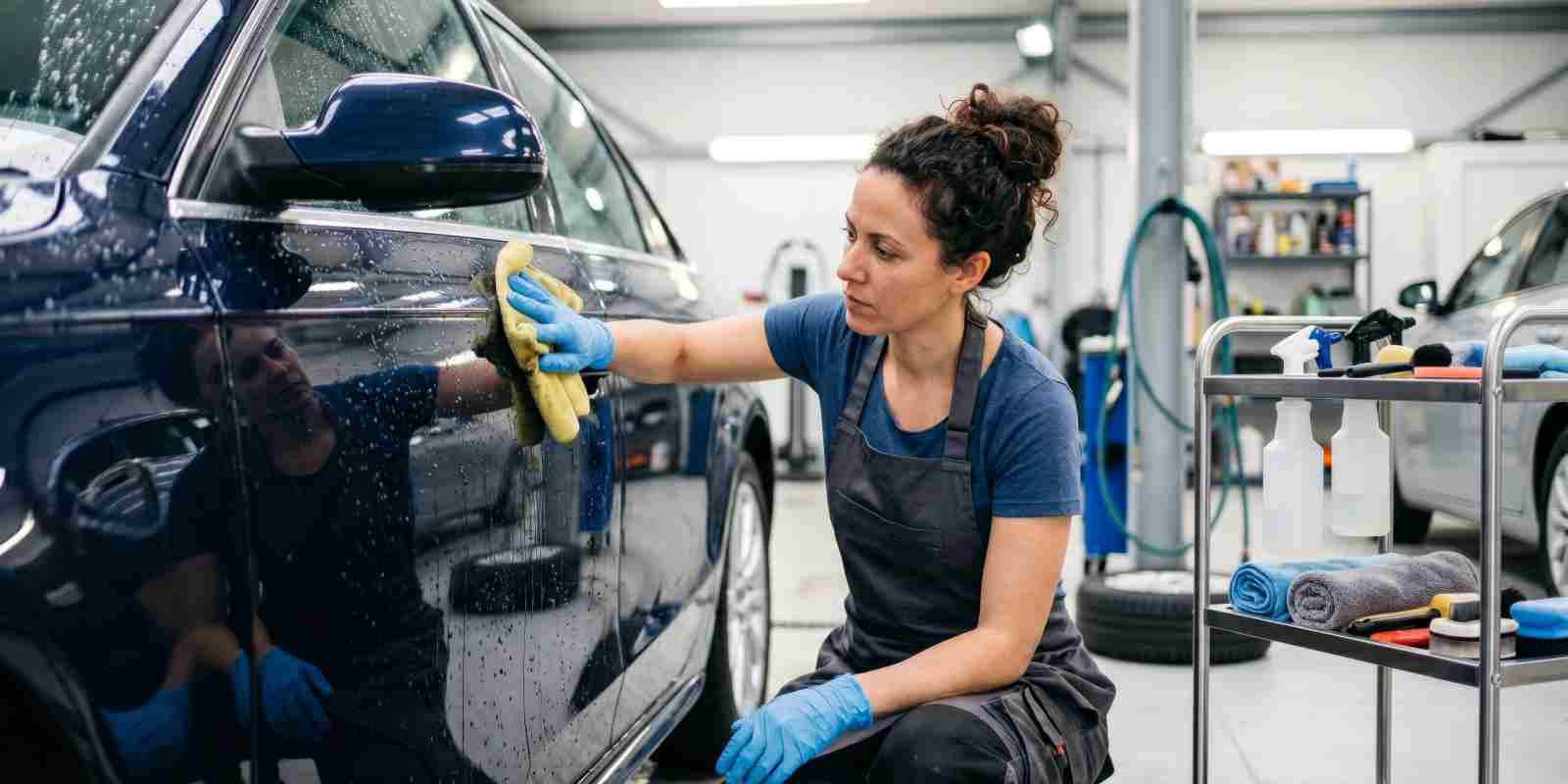
For many car wash owners, the majority of their investment is in the machinery. Conveyors, in-bay gantries, pump stands, dryers, and other equipment can all quit unexpectedly, and standard commercial insurance policies aren’t typically written to cover them.
Coverage designed for your car wash can protect your customers’ property while it’s in your care, as well as your facilities, your workers, your business operations, and your equipment. Equipment breakdown may cover when a motor or pump fails on its own, and it’s not in every package.
Why Property Insurance Stops Short of the Machine
The building and contents section of a car wash policy is typically written on one of three industry forms, named on your declarations page. Many washes carry the special form ISO CP 10 30, which covers any cause of loss it does not specifically exclude.
One entry in the list of what ISO CP 10 30 excludes is mechanical breakdown, including rupture or bursting caused by centrifugal force. Another entry applies to artificially generated electrical energy that damages or disrupts electrical gear, which includes arcing inside a motor starter or a variable frequency drive.
In short, if a high-pressure pump seizes and floods the pump room, water damage to the building and the contents around it is generally covered, while the failed unit itself may not be.
Equipment breakdown coverage, called boiler and machinery coverage in older forms, is the option that is most likely to cover that failed machine. It’s either endorsed onto a business owners policy or written separately.
Car Wash Equipment That Commonly Triggers Claims
Conveyor drive motors, hydraulic power units, and roller assemblies carry the highest repair costs in the tunnel. A rebuilt drive can also sit on a distributor’s back order for weeks, so lead time on those parts often runs longer than the work itself.
High-pressure pumps, blowers, and dryer motors give out differently. They run near continuous duty through a weekend rush and fail at a bearing or a seal with no single event to point to. Adjusters separate the deterioration that built up over months, which no breakdown form covers, from the sudden damage at the moment of failure, which is what the coverage is more likely to address.
Pay stations, tunnel controllers, variable frequency drives, and reclaim systems fail from different causes. A ruined controller board might stop a wash just as fully as a seized motor.
Business Income Can Exceed the Repair Cost
A closed tunnel loses revenue every hour it stays down, and that can quickly exceed the cost of the repair. Breakdown coverage can pay that lost income, though its clock typically starts after a waiting period and stops when the work could reasonably have been finished.
How the Waiting Period Works
Business income is normally subject to a time deductible rather than a dollar amount, commonly 24, 48, or 72 hours. Some carriers instead use an average daily value figure, multiplying your daily earnings by a set number of days. If your policy has a 72-hour waiting period, a four-day conveyor rebuild leaves roughly one payable day.
When the Payments Stop
The period of restoration runs for the time reasonably needed to repair or replace the equipment. A membership wash that keeps billing through a short closure may only realize the loss later through cancellations. An extended business income extension will keep paying after the repair is finished, for a set number of days named in the policy, though a carrier only adds it if you ask.
Coverage Boundaries Operators Miss
Wear and tear, gradual deterioration, corrosion, and faulty or inadequate maintenance are typically not included by equipment breakdown coverage. Deferred maintenance (service that was due and never done) is the exclusion most often cited when a claim is denied or reduced.
Warranties and Breakdown Coverage Do Not Do the Same Job
A manufacturer warranty addresses a defect in the part. It does not typically pay for the days a tunnel is closed or the freight to rush a replacement. Carriers may coordinate payment with what the warranty covers, so tell your agent which components are still under term.
Chemicals, Reclaim, and Your Discharge Notification
Spoilage and contamination coverage, added to the policy by endorsement, matters where chemical storage or a heated water reclaim system is on site, since a failed controller can ruin inventory the main limit was never meant to reach.
A Connecticut wash discharging to a sanitary sewer operates under the state’s Miscellaneous Industrial User general permit, which puts a notification on file with the local sewer authority and calls for semiannual inspection of the separator. As of March 2026, it also requires submission to the Department of Energy & Environmental Protection.
A failure in that pretreatment equipment could become a compliance question on top of a repair bill, and breakdown coverage does not pay the fine that follows. If you’ve had a compliance finding, confirm your obligations with the appropriate authority and consult your attorney.
Building Coverage Around How Your Wash Runs
When looking at equipment breakdown coverage, set limits against what it would cost to rebuild this year, not what the gear cost when the site opened. Pull a current quote from your distributor on the conveyor, the pump stand, and the dryers, then hold it against the breakdown limit on your declarations page.
Keep records of your completed maintenance and document service calls, as they will support a later claim. Sublimits deserve the same attention, since service interruption, expediting expense, and hazardous substance cleanup are typically capped below the policy limit.
JMG Insurance Corp has been helping families and businesses for over a hundred years. We place accounts with more than 150 carriers, giving our clients a wide range of service options and prices. Reach out to our insurance agents today, and we can help you compare carrier forms and evaluate whether your car wash equipment breakdown insurance limits match today’s replacement costs.