

Planning a home renovation usually means talking to a contractor to make detailed plans and estimate costs, going to your local government for permitting, and working with a bank for funding. It also means making sure your homeowners insurance is appropriate for the work being done.
Five specific points in a renovation timeline call for a policy review, starting well before the first contractor shows up and ending after the last inspection closes out the project.
Before Signing the Contractor Agreement
After you’ve chosen a contractor, ask for their certificate of insurance before you sign an agreement with them. That certificate should show current general liability and workers’ compensation coverage, with policy dates that run through your anticipated completion date. A contractor whose workers’ compensation lapses halfway through a three-month project may leave you holding the liability if someone gets hurt on your property.
This is also a good time to call your own insurance broker. A renovation that will add square footage, upgrade finishes, or increase the home’s overall value or risk profile can change the cost of your policy. Reviewing your current policy against the planned scope of your renovations gives you a chance to adjust your coverage on your own timeline, rather than scrambling once the work is already underway.
Before the Permit Is Pulled and Work Begins
Getting permits from the local government is usually a sign that work is about to start. It’s also a good time to take a second look at your insurance coverage. The kinds of work involved in a remodel, such as structural demolition and electrical rewiring, are accident-prone, and you’ll want to know that your insurance needs are addressed before there’s a risk of injury.
Most projects involving structural changes call for a builders risk or course of construction policy. This should be finalized before work begins. These policies may cover materials, fixtures, and equipment during construction in ways a standard homeowners policy isn’t scoped to handle.
If the Home Will Be Unoccupied During the Project
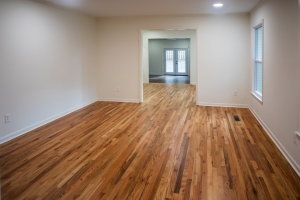
An empty house has a different risk profile than one that is lived in, and this typically shows up in one of two ways during a renovation. Generally, a home is considered unoccupied when nobody lives in it but the contents are still in place. A home is vacant when the people and the property are both gone.
A family that moves out for a three-week kitchen and bath renovation but leaves the house furnished has left it unoccupied. The same family gutting the place down to studs and putting everything in storage has a vacant home.
Vacancy is typically considered to start when the contents leave, but the exclusions usually attach only after the home has been vacant for between 30 to 60 consecutive days, depending on the carrier and the form. At that point, most policies drop some combination of vandalism, theft, and glass breakage.
If the home will sit empty, ask your broker about a vacancy permit endorsement, which can suspend some or all of the vacancy restrictions for a defined period. Not every carrier offers one on a homeowners form. For a longer project, you may need a separate vacant dwelling policy. Either way, the arrangement should be made before the house empties out.
At the Midpoint of an Extended or Multi-Phase Project
Projects that run long create their own insurance problems. A renovation that was supposed to take eight weeks and stretches to sixteen can quietly cross a vacancy clause threshold, a builders risk policy’s expiration date, or the home’s annual renewal, any of which can leave a gap nobody notices until there is a claim.
Before the project can creep past its original timeframe, schedule a midpoint review first with the contractor to check that the actual progress matches the plans. And then follow up with your insurance broker to make sure that none of your coverages will expire too early.
Scope changes deserve the same urgency. If a mid-project decision such as finishing an attic or expanding a kitchen footprint meaningfully increases the home’s replacement cost, call your broker on the front side rather than waiting for the annual renewal. A policy that was made for the replacement cost of your home pre-renovation may not pay out based on the home’s new scope.
When the Renovation Is Complete

A finished renovation may change the value of your home and what your policy is built to cover. Added square footage or a finished basement may increase replacement cost, and a new pool, wood stove, or home office can increase the risk profile.
If an accident happens and you have to file a claim, the payout is based on the limits in your policy, not on what the home is actually worth now. A policy that isn’t updated leaves you financially exposed.
Some improvements also qualify for premium credits. A new roof, updated electrical panel, or modern plumbing system can reduce a homeowner’s premium, but only if the improvement is documented and reported to the broker. Carriers vary in what they credit and by how much, so confirming eligibility with your broker directly is the only reliable way to know what applies to your specific policy.
Start the Conversation With JMG Before the First Wall Comes Down
Home renovations happen in phases, and some are important triggers for reviewing your renovation or home insurance policies. JMG Insurance Corp has been proudly serving our community for over a hundred years, helping homeowners find the coverage they need for every stage of their build and beyond.
If you’re in the planning stage of a renovation or have hit one of the triggers we’ve discussed, contact JMG today to review your current plan and options for the future.