
Essential Takeaways:
- Replacement cost coverage pays to rebuild the home without deducting for depreciation.
- Victorian homes cost far more to rebuild than modern construction homes of the same size.
- Actual cash value policies can leave the owners of older homes severely underinsured.
- Extended and guaranteed replacement cost coverage provides valuable protection beyond the standard limits.
- Ordinance or law coverage handles the cost of required code upgrades following a loss.
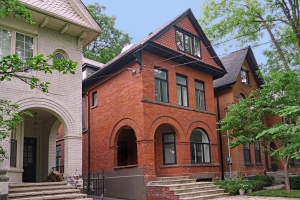
Victorian homes are full of charm, with their carved millwork, ornate trim, and decorative plaster. However, all of these features are expensive, and if a disaster, such as a storm or fire, forces you to rebuild, a standard homeowners’ insurance policy may not be enough to cover the full cost of restoring these essential details.
If you own an older home, you need to be aware of the difference between actual cash value and replacement cost coverage. After all, it could mean the difference between a financial disaster and a full rebuild.
What Replacement Cost Coverage Actually Means
Replacement cost coverage will pay the expenses involved in repairing or rebuilding a home using materials of the same type and quality; there will not be any deductions for depreciation. Actual cash value coverage, in contrast, subtracts depreciation from the payout. As a result, the older a home and its components are, the less the insurer will pay to the owner in the event of a disaster.
This gap may not be significant in relatively new homes, but if you have a Victorian built in the 1890s or early 1900s, the difference could be enormous. Actual cash value on a home that counts its age in centuries could fall dramatically below what it would cost you to rebuild what you lost.
Why Older Victorian Homes Are Different
It is the same features that give Victorian homes their timeless appeal that can make rebuilding them costly. Stained glass windows, wraparound porches, slate roofing, plaster walls, ornate millwork, and turrets are not standard items in lumberyards; skilled craftspeople must reproduce them, and they charge premium rates for their work.
How Actual Cash Value Falls Short on an Aging Home

Depreciation schedules tend to hit older homes hard. A roof that is 40 years old, plaster walls, or original windows can all be heavily discounted under an actual cash value policy. Even though the replacement cost of those materials could be rather high, the insurer’s payout will reflect their age rather than their value to the homeowner or the community.
It is also worth mentioning that insuring a Victorian home to its market value can backfire. In many areas, an older home might have a market value that is far lower than its true rebuild cost. For example, a Victorian in a modest neighborhood might cost $600,000 to reconstruct but would sell for only $350,000. This creates a notable gap that many homeowners would struggle to cover.
The Coverages That Actually Protect a Victorian
The following is an overview of the coverage types that help protect owners of Victorian homes.
Extended and Guaranteed Replacement Cost
Extended replacement cost coverage pays a set percentage above the stated dwelling limit, which is typically 125% to 150%, if the costs of rebuilding exceed expectations. Guaranteed replacement cost goes further, covering the full cost of rebuilding without any cap. Both options provide a cushion that is especially valuable for older homes, where actual rebuild costs routinely exceed initial estimates.
For Victorian homeowners, the benefits of these options are clear. Reconstruction bids for period homes are notoriously unpredictable, and a policy that stops paying when the estimate runs out could leave the owner footing the bill for the rest of a long, expensive project.
Ordinance or Law Coverage
Building codes are another aspect that can catch some owners of older homes off guard. A Victorian built 100 years ago was naturally built to codes that have since changed dramatically.
Following major losses, most jurisdictions require that any rebuilt parts meet current codes. This often requires homeowners to make expensive upgrades to their plumbing, insulation, electrical systems, and the house’s structural elements.
A standard policy will normally exclude these code-driven upgrade costs. Ordinance or law coverage fills the gap, paying for any additional expenses incurred in meeting the latest regulatory requirements.
Comparison: Actual Cash Value vs. Replacement Cost for a Victorian Home
| Factor | Actual Cash Value | Replacement Cost With the Right Add-Ons |
| Payout Basis | Depreciated Value | Full Cost to Rebuild, Like-for-Like |
| Ornate Features | Often Underpaid or Excluded | Reproduced With Matching Materials |
| Code Upgrades After a Loss | Owner Pays Out of Pocket | Covered by Ordinance or Law |
| Risk of Underinsurance | High on an Older Home | Sharply Reduced With Extended or Guaranteed Limits |
| Out-of-Pocket After a Total Loss | Potentially Severe | Minimized |
How to Know If Your Policy Measures Up

A policy review doesn’t have to be overly complex. In fact, the answers to a few direct questions can be very revealing:
- Is the policy written on an actual cash value or replacement cost basis?
- Does it include extended or guaranteed replacement cost coverage?
- Is ordinance or law coverage included, and if so, what is your limit?
- Does the dwelling limit reflect a current rebuild estimate rather than market value?
If any of those answers are unclear, an independent review is the best way to determine whether your coverage will actually help when you need it most.
Find Out Whether Your Victorian Is Truly Covered
Older homes deserve more than a standard policy written for new construction. At JMG Insurance, we work with homeowners to assess whether their coverage reflects the true cost of rebuilding their home, including its irreplaceable character and period details.
We’ll review the replacement cost basis, evaluate extended or guaranteed replacement cost options, and determine whether ordinance or law coverage is in place and adequate.
Don’t wait for a fire or storm to find out your insurance falls short. Contact JMG Insurance today for a policy review, and we’ll make sure your coverage is built to protect everything your Victorian home actually represents.